
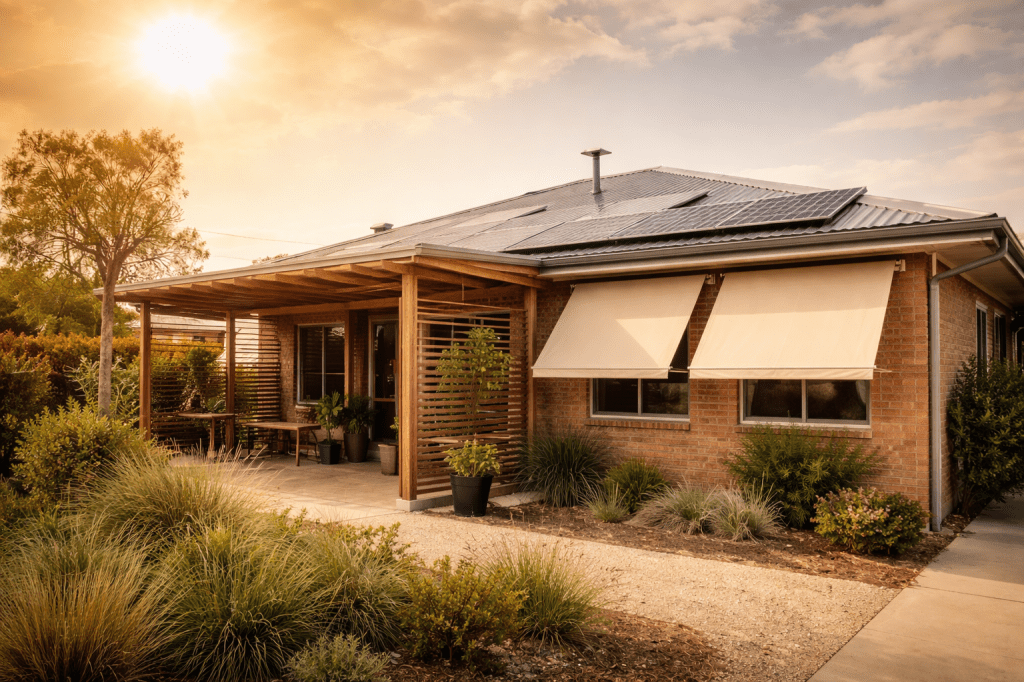
Most of the homes we will live in over the next 30 to 50 years already exist. That simple fact matters, because while new buildings can be designed for a changing climate, resilience for most people will depend on how well existing homes can be adapted to cope with increasing temperatures and more frequent service disruption.
Retrofitting for resilience is not about chasing perfection. It is about reducing risk, improving habitability, and giving buildings a greater margin of safety when conditions exceed the assumptions they were originally designed for.
Start with heat, not technology
In a warming climate, extreme heat is the most immediate and widespread threat to habitability. Yet many retrofits focus first on mechanical systems rather than reducing heat entering the building in the first place.
The most effective improvements are often deceptively simple:
- external shading to windows, particularly on northern and western elevations
- reducing direct solar gain before it reaches the glass
- improving roof insulation, where the majority of heat enters most homes
- sealing air leaks that allow hot air to infiltrate during heatwaves
These measures reduce indoor temperatures regardless of whether the power is on or off. They also lower reliance on air-conditioning during normal conditions, reducing energy demand when the grid is under stress.
Windows matter — but how they are treated matters more
In many Australian homes, single glazing is still common. While replacing windows can help, it is often expensive and disruptive. External shutters, awnings and adjustable screens can achieve significant performance gains at a fraction of the cost, particularly when combined with curtains or internal blinds.
Shading works because it addresses heat before it enters the building. Once heat is inside, it is far harder to remove — especially during prolonged heat events or power outages.
Ventilation as a safety valve
Cross-ventilation and night purging are often overlooked in retrofit discussions, yet they are critical to passive survivability. Even modest improvements — such as operable windows on opposing sides of a dwelling or secure night-time ventilation — can significantly reduce indoor temperatures during heatwaves.
These strategies rely on airflow and temperature differentials, not electricity. When designed carefully, they can provide relief even under adverse conditions.
Resilience is incremental, not absolute
Retrofitting an existing home will never turn it into a perfect climate-adaptive building. Each improvement increases habitability during extreme conditions and reduces dependence on systems that may fail when they are most needed.
The goal is to reduce the impact of extreme conditions and service disruptions on occupants — particularly older people, children, and those with health conditions — by maintaining habitable internal conditions.
Designing for the climate we are entering
As the climate continues to change, retrofitting existing homes will increasingly support health outcomes, not just comfort. Prolonged exposure to high indoor temperatures is already linked to heat stress, dehydration and increased mortality, particularly among older people, children, and those with existing health conditions.
Resilience does not begin with technology. It begins with how a building limits heat gain, ensures hot air can escape, and provides occupants with spaces that remain habitable during extreme conditions. Applying this understanding to existing homes is what turns retrofitting into a practical tool for safety, not just efficiency.
In the next post, I’ll look at why rooftop solar often fails to deliver resilience during power outages — and what would need to change for it to do so.
 The Pieces Fit - homepage
Leave a comment