
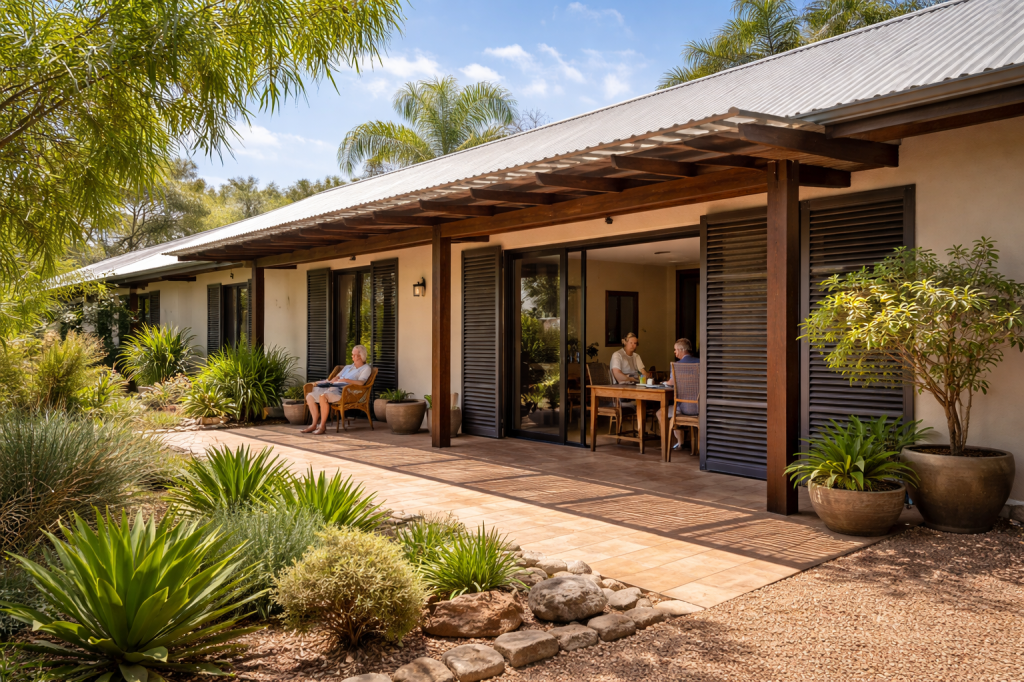
When people talk about comfort in buildings, the discussion often turns quickly to air-conditioning, heating systems and smart controls. These systems matter — but they are not where comfort begins, and they are rarely where resilience is built.
Thermal performance is shaped first by design and construction. Insulation, glazing, shading, airtightness and thermal mass determine how a building moderates heat and cold long before mechanical systems are switched on. Get these fundamentals right, and systems work less, last longer and fail less often. Get them wrong, and buildings become permanently dependent on energy-intensive solutions.
In a changing climate, this distinction matters. As temperatures rise and heatwaves become more frequent, buildings that rely heavily on mechanical cooling become more vulnerable — not just to higher energy costs, but to system failure during extreme events. Thermal performance that is embedded in the fabric of the building provides a level of passive resilience that systems alone cannot.
This is particularly important in housing. Poor thermal performance doesn’t just increase energy use; it affects health. Overheating in summer and inadequate warmth in winter disproportionately impact the elderly, young children and those with existing health conditions. Comfort is not a luxury — it is a basic requirement for liveability.
Thermal performance also affects how buildings age. Well-insulated, well-shaded buildings experience less thermal stress, which can extend the life of materials and reduce maintenance demands. Conversely, buildings that swing rapidly between hot and cold place greater strain on façades, finishes and services, increasing the likelihood of premature failure.
Designing for thermal performance does not mean eliminating systems. It means right-sizing them. When buildings are designed to moderate temperature naturally, mechanical systems can be smaller, simpler and more efficient. That reduces upfront cost, operational energy use and long-term reliance on increasingly strained power networks.
Standards and codes play a critical role here. In many jurisdictions, minimum thermal requirements still reflect past climate conditions rather than future ones. Improving thermal performance is one of the most effective ways to reduce energy demand while also improving comfort, health and resilience — yet it remains undervalued because its benefits are gradual and often invisible.
Thermal performance sits at the intersection of design, materials and climate. It is where thoughtful planning translates directly into everyday experience. In a hotter, more variable future, buildings that maintain comfort without constant mechanical intervention will not just be more efficient — they will be more robust places to live.
Next, I’ll look at adaptability over time — and why buildings must be able to change as conditions, technologies and uses evolve.
 The Pieces Fit - homepage
Leave a comment