
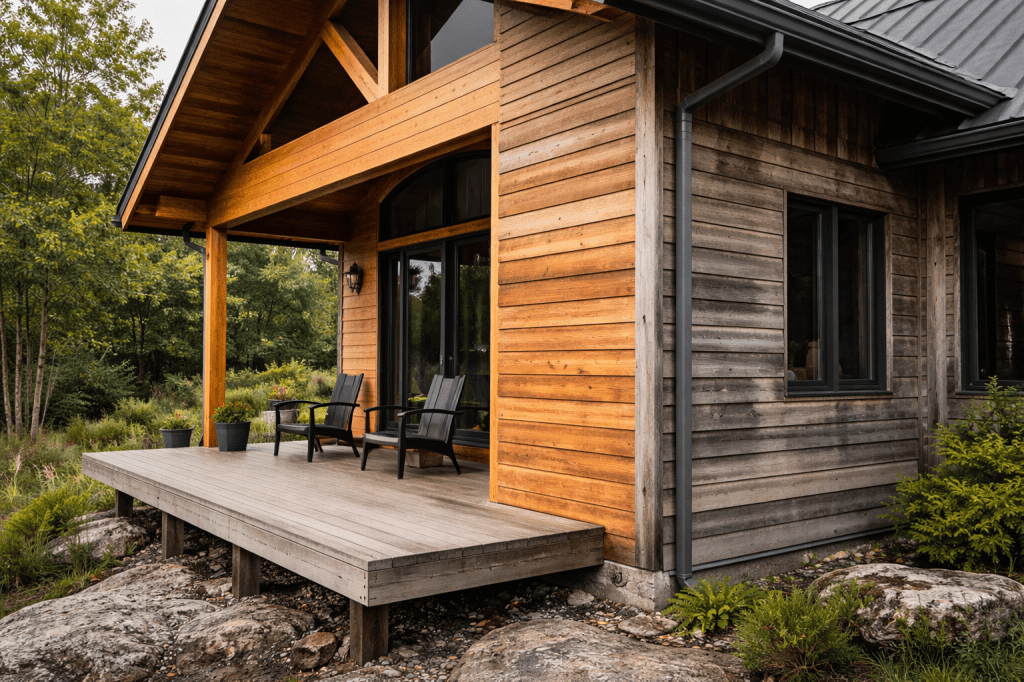
After form, orientation and function are set, material choices become the next major determinant of how a building performs over time. They influence not only embodied energy and emissions, but durability, maintenance, comfort, and the ability to adapt as conditions change.
Too often, materials are discussed narrowly — framed as “good” or “bad” based on carbon metrics alone. While embodied energy matters, it is only part of the picture. A material that performs well on paper but degrades quickly, requires frequent replacement, or struggles under future climate conditions may ultimately increase energy use and resource consumption over a building’s life.
Durability matters more than it is often given credit for. Buildings designed to last 50 to 100 years must be constructed from materials capable of withstanding a changing climate, including higher temperatures, more intense rainfall, longer dry periods and greater exposure to fire and weathering. Premature failure leads to increased repairs, replacement and retrofit — all of which carry their own energy and carbon costs.
Maintenance is equally important. Materials that require constant upkeep, specialised coatings, or frequent replacement place ongoing demands on energy, labour and resources. In a future where supply chains may be less predictable and skilled labour more constrained, simplicity and robustness become strengths rather than compromises.
This does not mean defaulting to a single material or rejecting innovation. Timber, concrete, steel and emerging composites all have roles to play. What matters is how they are used, where they are used, and whether their properties suit the climate they will face over their lifetime. Hybrid solutions — combining materials to balance strength, thermal performance and durability — are often more effective than purist approaches.
Adaptability should also be considered at the material level. Can components be repaired rather than replaced? Can elements be upgraded as technology improves? Are fixings, junctions and assemblies designed for disassembly rather than demolition? These questions shape whether a building can evolve without excessive waste.
Material choices lock in consequences for decades. They influence how a building ages, how it performs under stress, and how easily it can respond to change. In a changing climate, selecting materials that last — and can adapt — is not conservatism. It is good design.
Next, I’ll look at thermal performance — and why comfort, health and resilience should come before mechanical systems.
 The Pieces Fit - homepage
Leave a comment