
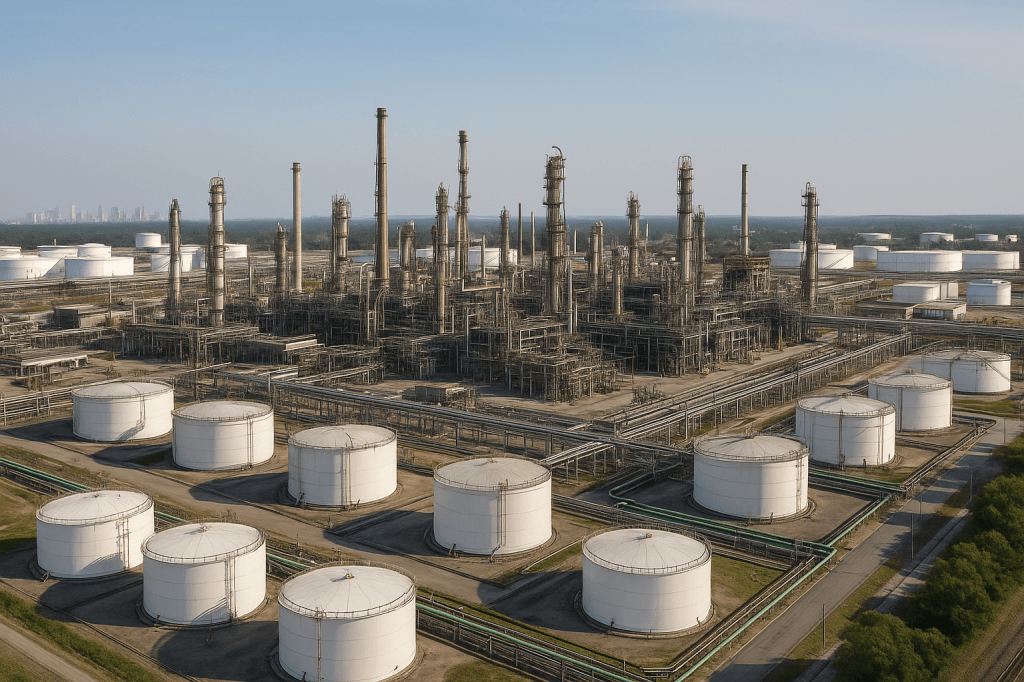
“Complex problems aren’t solved by political slogans — they’re solved by deciding the order in which the problem should be tackled.”
Much of the public debate about climate change still revolves around distant targets and abstract outcomes — net zero by 2050, temperature limits, or emissions curves that feel disconnected from everyday decisions. Yet the real challenge isn’t whether those goals are desirable. It’s whether we have a practical, credible way of getting there.
This series starts from a simple premise: fossil fuels are not inherently the problem — how we use them is. Oil, gas and coal underpin modern life in ways that won’t disappear overnight. Pharmaceuticals, materials, aviation, agriculture and manufacturing all depend on them in different ways. Pretending otherwise only undermines serious discussion.
But there is a crucial distinction we rarely make clearly enough. Fossil fuels are still being burned at enormous scale for electricity, transport and low-grade heat — uses where alternatives already exist or are rapidly maturing. Continuing to treat all fossil-fuel use as unavoidable masks where real progress could be made now.
What’s missing is not ambition, but strategy.
Rather than arguing endlessly about emissions as an outcome, this series explores the idea of a managed reduction: a deliberate, staged reduction in fossil-fuel combustion, sector by sector, based on what can realistically be replaced today and what will take longer. That means prioritising reductions where technology, cost and reliability already align — while being honest about areas that will require further innovation and time.
This isn’t about eliminating fossil fuels entirely, nor about imposing sudden disruption. It’s about making informed choices, sequencing change intelligently, and reducing dependence where it delivers the greatest benefit with the least risk.
The posts that follow will look at what could be reduced first, what’s harder but achievable, what won’t change quickly, and who actually has the power to lead when global agreements stall.
If we want a future that is stable, affordable and resilient, we need to move beyond slogans — and start managing the transition as deliberately as any other complex system.
“If a managed reduction is the goal, then the first task is prioritisation. Some uses of fossil fuels can be reduced now; others will take time. In the next post on The Pieces Fit, I look at how that hierarchy begins.”
Next post:
A Fossil-Smart Future: What Do We Reduce First?
 The Pieces Fit - homepage
Leave a comment