
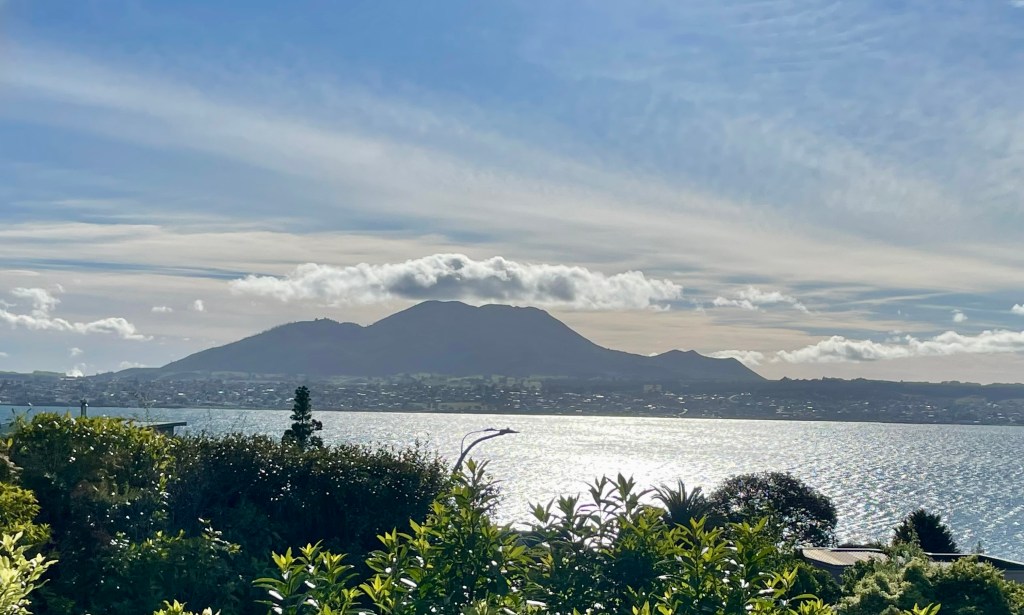
Travelling through New Zealand made me far more aware of how active the earth truly is. In many parts of the world, the ground feels stable and permanent, but here the signs of movement sit in plain sight — geothermal vents, steaming valleys, volcanic cones, and landscapes lifted and reshaped by forces beneath the surface. It reminded me that the earth is constantly shifting, driven by tectonic pressures that occasionally break through as earthquakes or volcanic events.
Some landscapes reveal slow, continuous release of pressure; others bear the marks of sudden rupture.
Taupo reflects the gradual kind.
Napier experienced the abrupt one.

Napier — When Change Arrives All at Once
In 1931, Napier changed in moments. A 7.8-magnitude earthquake struck without warning: buildings collapsed, fires spread quickly, and large areas of land were lifted several metres. The city was destroyed by uncontrolled forces.
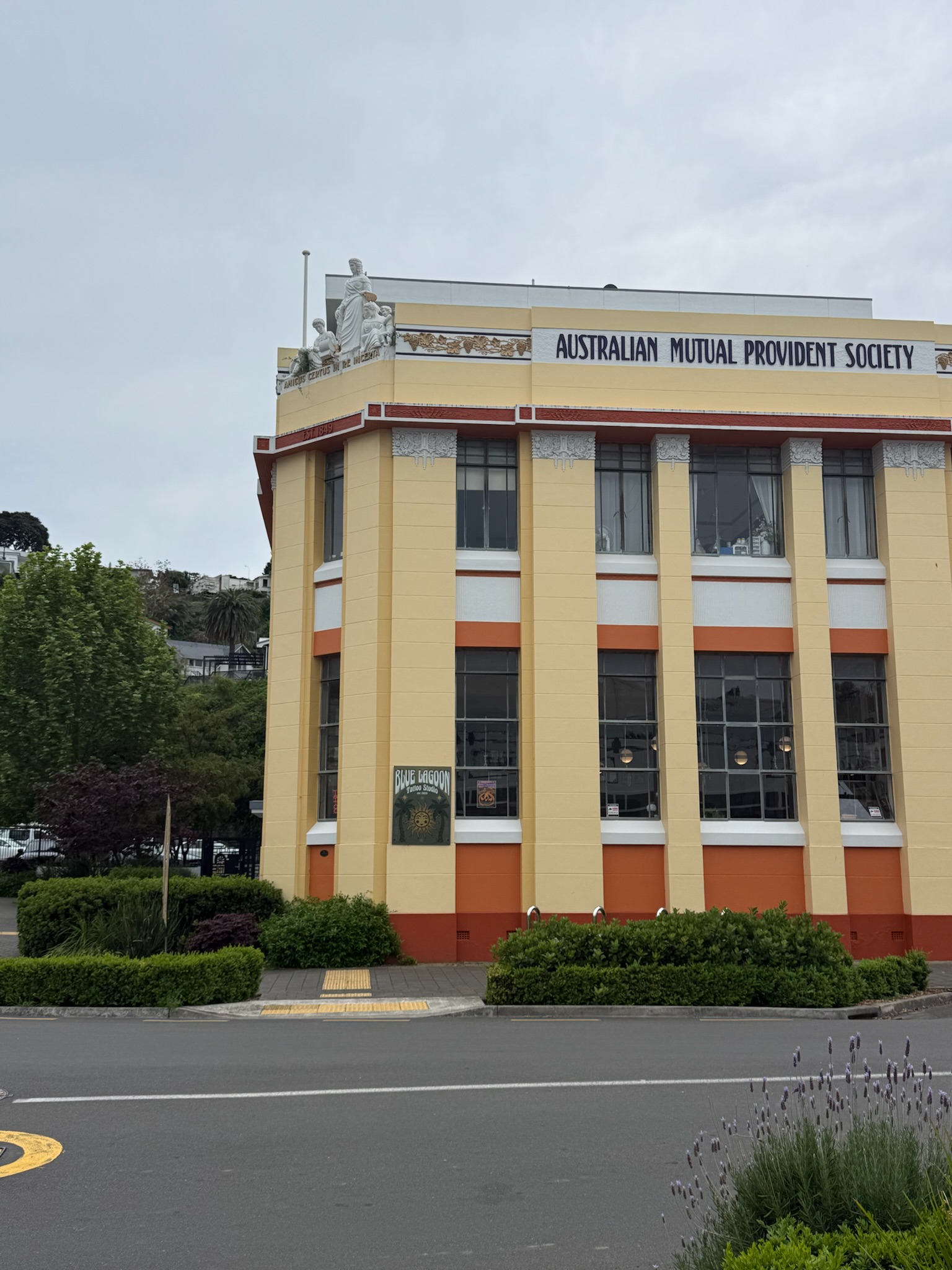

Walking those streets now — pastel facades, clean Art Deco lines, sunlight catching sharp geometric edges — it is difficult to reconcile the calm, ordered appearance of the city with the destruction that came before. Yet the memory is present in plaques, museums, and the stories that remain part of the local identity.
Napier didn’t just rebuild; it rebuilt with intention.
Brick construction was replaced with reinforced concrete.
Unsafe structures were removed.
New seismic standards were adopted.
And remarkably, much of the rebuilding was completed in just over two years.
The earthquake destroyed the city. The reshaping came afterwards — in the choices made by a community determined to adapt. They replaced outdated construction methods with reinforced concrete, adopted stricter seismic standards, and used the rebuilding effort to introduce a fresh architectural identity through the emerging Art Deco style. The result was a city not only restored, but rebuilt to be safer, stronger, and better suited to the risks it now understood.
Taupo — Where Pressure Finds Its Release
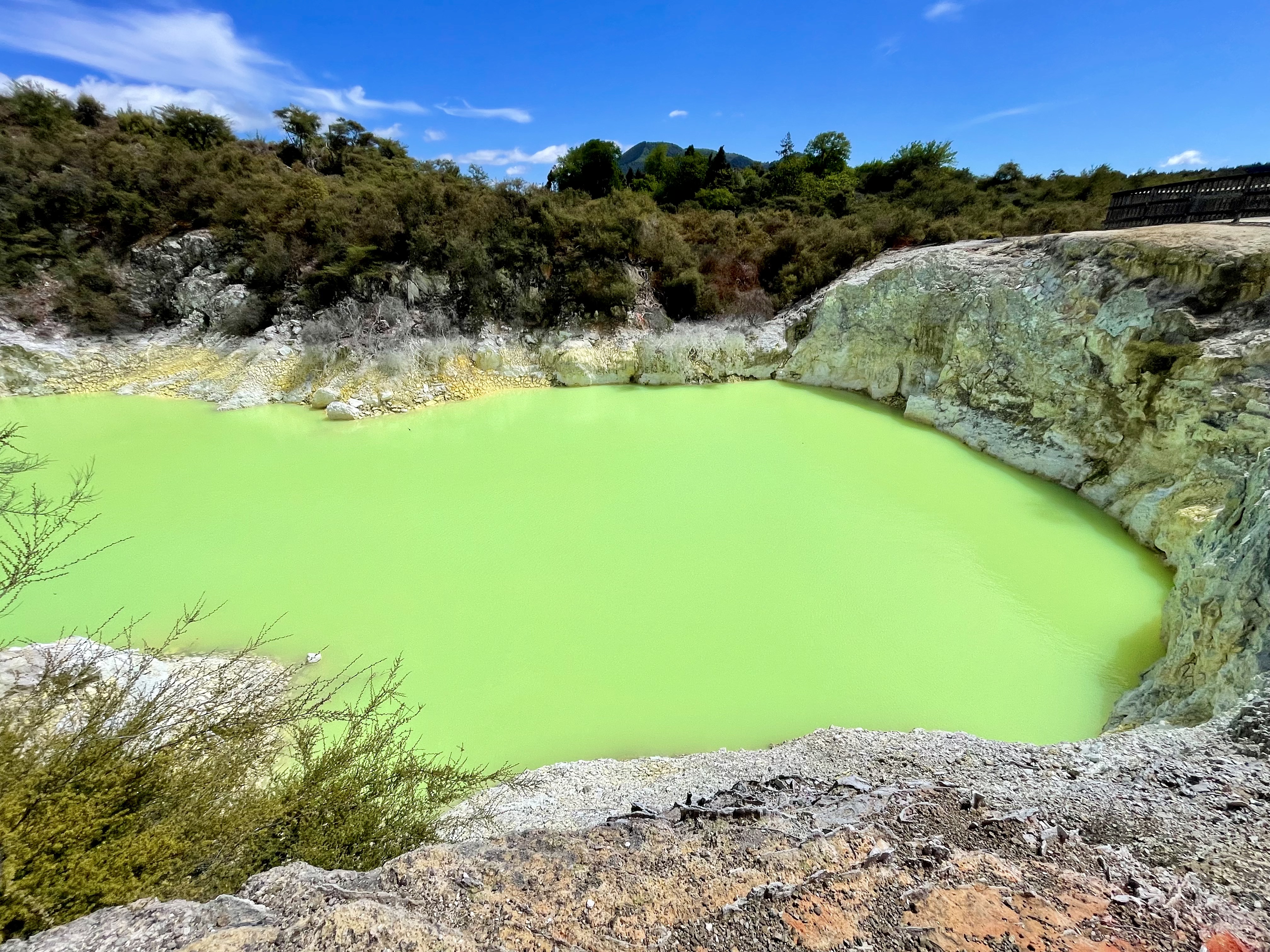
If Napier shows how change can arrive suddenly, Taupo reflects the slow, continuous kind. The region sits within the Taupō Volcanic Zone, where heat, gas, and pressure move constantly beneath the surface. Geothermal vents, steaming valleys, mineral pools, and mud fields make that activity visible in everyday landscapes.
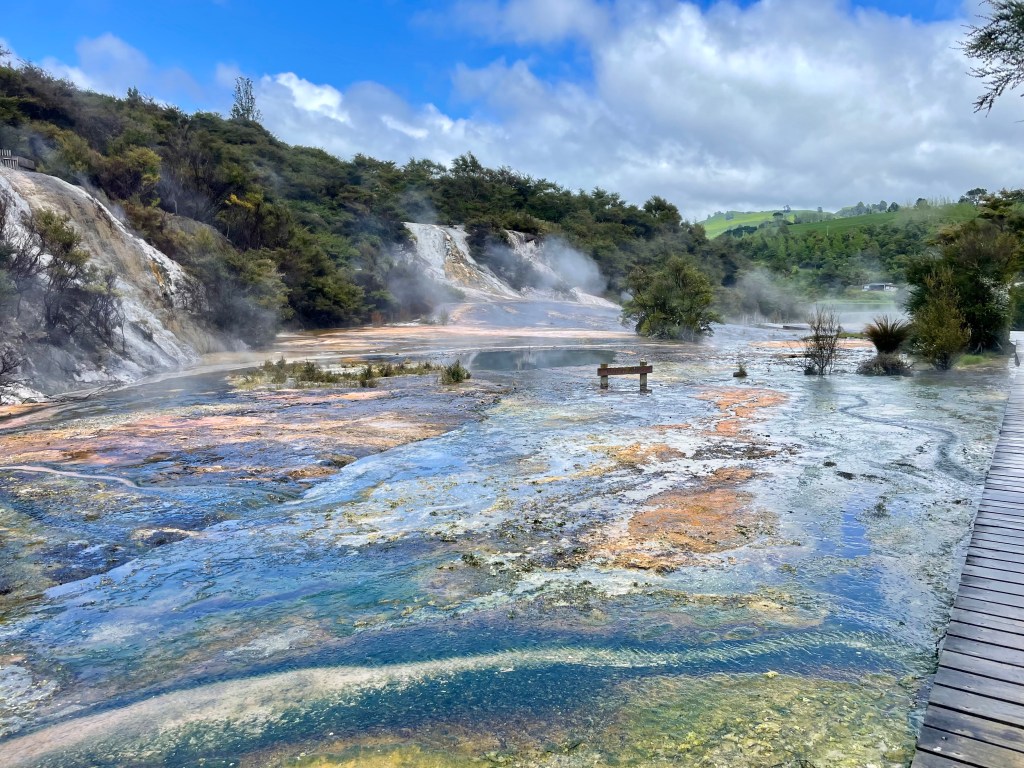
This is change measured over millennia — a landscape shaped by deep, persistent forces that release energy gradually through thousands of small outlets long before anything becomes dramatic.
The Lady Knox geyser illustrates this balance. Each morning, a surfactant is added — just as it was accidentally over a century ago — breaking the surface tension and allowing built-up geothermal pressure to escape as a controlled eruption. It doesn’t create the phenomenon; it simply reveals the pressure that is already there.
Taupo is not defined only by risk but also by adaptation. Local ecosystems have evolved to tolerate the heat, minerals, and acidity that would be hostile elsewhere. More importantly, New Zealand has learned to work with these forces rather than fear them. Geothermal energy is now a key part of the country’s renewable energy supply, converting the earth’s internal heat — a by-product of the same system that once produced catastrophic eruptions — into stable, low-emission power. It is a clear example of adapting a potentially destructive natural system for societal benefit.
Even Lake Taupo itself — calm and expansive — is a reminder of the scale of the forces beneath. It fills the caldera of one of the largest volcanic eruptions in history, covering an area comparable to Singapore. Today it sits in a state of subdued activity, but it remains part of an active system capable of changing again.
Taupo shows that some forms of pressure can be lived with — even used to advantage — but only when they are understood and respected.
COP30, Climate Pressure & Adaptation
Travelling through Napier and Taupo made me far more aware of the power of the earth’s natural systems — both the sudden and the slow — and how communities must adapt when those forces impact them. That same need for adaptation now sits at the centre of the discussions taking place at COP30 in Belém.
Unlike earthquakes or volcanic events, climate change is not an inevitable natural process. It is driven by human decisions — years of delay, short-term thinking, and a reluctance to act early because the threat develops slowly rather than violently. Yet slow movement does not mean safe movement. Every system under pressure reaches a point where incremental change becomes sudden, and the consequences are no longer reversible.
At COP30, delegates are expected to approve a framework of one hundred global indicators to track climate adaptation — an attempt to make progress measurable and comparable across nations. The fact that such a framework is needed, and that adaptation finance is expected to rise twelvefold by 2035, highlights the scale of the challenge ahead. These figures alone illustrate how far behind the world currently is, and how much worse the situation will become if nations cannot reach agreement.
Adaptation is no longer open to debate or discussion; it is now a global priority. How we design our homes, power our cities, safeguard water, grow food, and build infrastructure will determine the quality of life for future generations. These are not abstract policy concepts — they are practical requirements already shaping decisions around the world.
What struck me most on this trip was how Napier rebuilt after disaster and how life around Taupo has adapted to continuous geothermal hostility. In both cases, survival depended on adaptation — immediate in one instance, gradual in the other. Listening to the early reports from COP30, it was difficult not to compare those lessons to the scale of what humanity now faces.
The landscapes of Napier and Taupo reminded me that when change accelerates — whether violently or quietly over time — the cost of inaction is always paid later, and always at a higher price.
Returning Home
After returning home, it became clear how differently Australia and New Zealand are placed to face the impacts of climate change. New Zealand generates most of its electricity from renewable sources, supported by extensive hydro and geothermal production, while Australia still relies heavily on fossil fuels and remains one of the world’s largest exporters of coal and gas. Even as Australia expands solar and battery capacity, our exposure to climate impacts remains high. It reinforced the uncomfortable truth: some nations will be far better positioned than others, and adaptation is becoming a marker of future security, not just environmental policy.
What New Zealand showed me, and what COP30 now echoes on a global scale, is that adaptation is no longer a distant consideration but an urgent responsibility.
As I continue to follow the discussions from COP30, it has become increasingly clear that complacency in the face of climate change will create a crisis far greater than any natural disaster — not because the earth changes, but because we fail to adapt as it does. If we do not recognise this and act with urgency and foresight, then humanity’s time here may be far shorter than it needs to be.
 The Pieces Fit - homepage
Leave a comment