
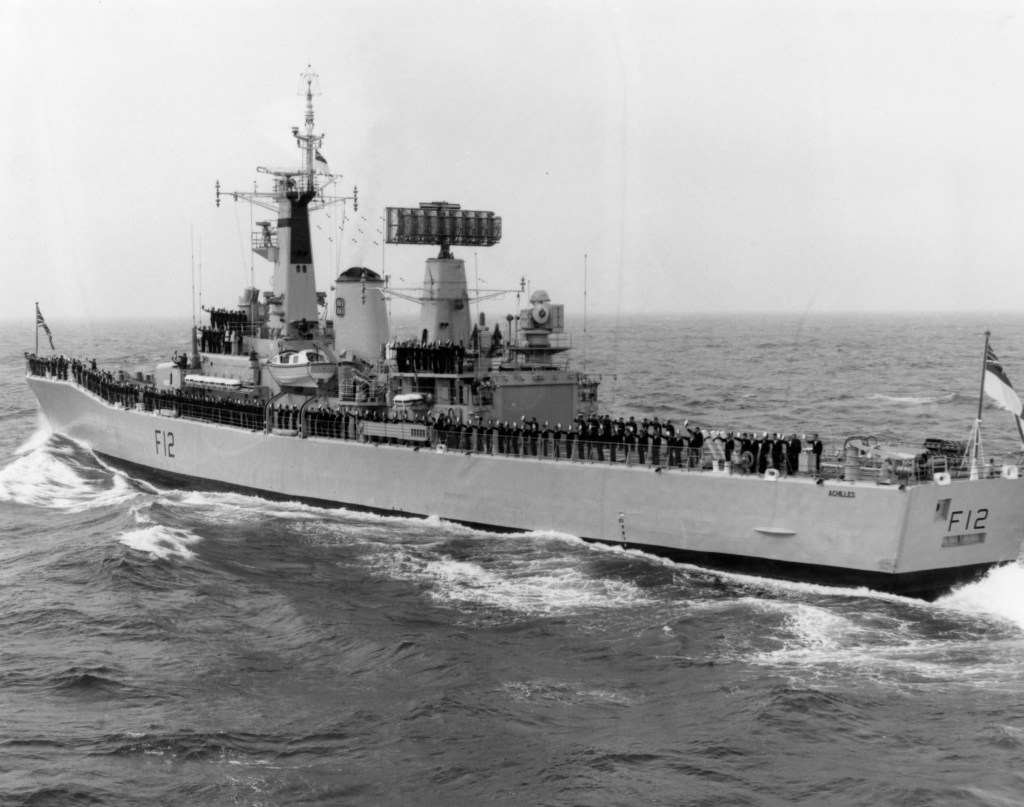
HMS Achilles (F12) – on patrol in the North Atlantic
“Readiness at sea is built not on ceremony, but on the quiet work of engineering.”
– Royal Navy saying
It is mid-June 1977, and Achilles is once again preparing to go to sea. A single boiler is operating, providing steam for auxiliary functions. The ship’s main steam turbines are slowly warming through, a process that will take 24 hours in order to ensure the shafts don’t warp due to thermal stresses. The ships turbo-generators are now running and electrical load is transferred back from shore supply to the ship in readiness to disconnect the ‘umbilical’ lifelines that have been in use since Achilles came alongside some weeks earlier. Orders are received from Admiralty House to sail at 08:00 Wednesday morning.
04:00 Wednesday: The second boiler is fired in preparation to transition from auxiliary to main and allow the ship to sail under her own power. In auxiliary mode water is fed to the boiler via the auxiliary feed pump and feed tank, both located in the boiler room. To provide steam to the main engines under full operating conditions, the main feed pump is brought into service. To put the size of this pump into perspective, it could empty an Olympic size swimming pool every minute. These pumps are fitted with layers of protection; a governor system to match rotational speed with fluid flow, overspeed and overpressure trips that will shut off steam in the event the turbine accelerates beyond design limits. These safeguards are regularly tested as part of the normal maintenance routines.
07:00 Wednesday: An hour before Achilles is due to sail, turning gear is removed, live steam admitted into the engines, and propellor shafts are turning in readiness for sea. A final check of all systems is underway; plummer blocks, water desalination plant, ships generators, boilers, engines, condenser cooling water pumps, steam ejectors, condensate pumps and the list goes on. Everything must be checked and operating flawlessly before the final signal is sent to the bridge: “Engineering is ready for sea”. Tugs stand by to pull Achilles from her berth and out into the English Channel, westward into the expanse of the North Atlantic.
07:45 Wednesday: At first, all seems routine. As steam is admitted to the turbines, the feed pump begins to pick up speed and control — but then, alarmingly, it didn’t stop. The governor fails to check its acceleration. Revolutions rise sharply: 5,000… 7,000… 9,000… 12,000. The whine of the turbine rises to a terrifying scream, vibrations are felt through the deck above, until turbine blades fracture and the machine tears itself apart. The overspeed trip eventually activates, shutting off steam, but far too late — only a shattered turbine casing remains.
Immediately the Chief Engineer issues an order to shut steam to the main engines. Turning gear is re-engaged. The auxiliary feed pump is hurriedly brought back on line to maintain a water supply to the boilers. Deprived of her main feed pump, Achilles cannot proceed to sea. Shore services are hastily reconnected, boilers shut down, and the engineers turned grimly to assess the wreckage and plan the repairs.
The heartbeat of Achilles’ engineering plant is silenced — leaving the ship crippled at the very moment she had been ordered to sea.
Coming next: with Achilles immobilised, the dockyard delivers grim news – repairs could take months, but Admiralty orders cannot wait…..
 The Pieces Fit - homepage
Leave a comment