
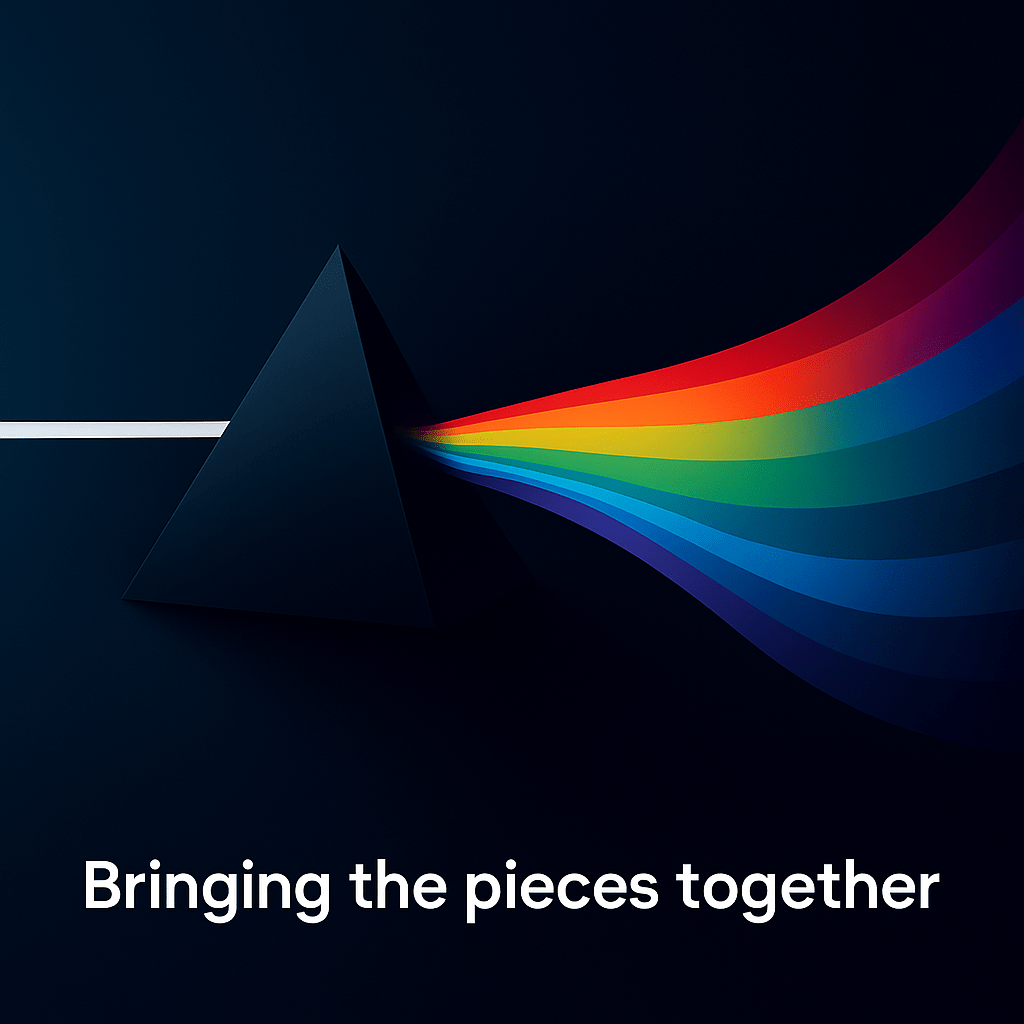
Every project has a dark side. Time slips away. Money dominates decisions. Risks erupt. People burn out. The shadows are real, and ignoring them doesn’t make them go away. But just as Dark Side of the Moon wove those themes into something coherent, project managers can acknowledge the shadows while reducing their hold.
Which brings me to time. Projects so often stumble at the start — approvals drag, decisions stall, momentum evaporates. The way to counter this isn’t only better scheduling, it’s clarity. Clear entry conditions, agreed decision pathways, and early momentum can prevent those wasted months before the “starting gun” is fired. Projects need energy as much as they need plans.
And if time is one challenge, money is another. Budgets can consume projects, distorting decisions and shrinking ambition. The antidote is to keep value in view. Benefits management, outcomes frameworks, and purposeful conversations can shift the dialogue from cost alone to cost and value. It’s not about ignoring the numbers, but about making sure they don’t drown out the purpose.
Beyond time and money, every project lives with risk. Too often it becomes a register — a bureaucratic exercise in documentation. The real defence against risk is culture. Projects that regularly ask “what if,” that test scenarios early, that welcome difficult conversations — these are the ones that manage uncertainty before it manages them.
And then there are people. The human factor is the most unpredictable part of any project. Stress, politics, burnout — these can derail even the most perfectly planned program. The solution isn’t process, it’s leadership. Psychological safety, open dialogue, and a willingness to call out unhelpful behaviour are essential. Teams that feel safe to speak up are the ones that catch problems before they spiral.
Which leads to integration. Projects are never just tasks on a chart; they are moving pieces of a larger whole. To keep that whole intact requires tools that make the connections visible — roadmaps, dependency maps, and simple narratives that remind everyone of the bigger picture. Integration isn’t a once-off act at project close; it’s a continuous practice.
It’s worth remembering that Dark Side of the Moon was the first Pink Floyd album where the band felt confident enough to print the lyrics on the sleeve. The words mattered. And in project management, the words we use — about purpose, value, and people — matter too. They’re not decoration; they’re part of the architecture that holds the whole together.
As Roger Waters reflected years later:
“It’s very well-balanced and well-constructed, dynamically and musically, and I think the humanity of its approach is appealing… It’s satisfying.”
That sense of balance, humanity, and satisfaction is what great projects should aspire to. The shadows will always be there, but good project leadership is about recognising them, reducing their effect, and keeping the flow positive. The best projects — like the best music — don’t banish the dark side, they transform it into something greater.
This trilogy may close the chapter on the Dark Side of Project Management, but the journey doesn’t end here. In the weeks ahead, I’ll be exploring new Interludes — from books that shape our thinking, to stories from my time in the Royal Navy, to moments in everyday life where the pieces fit (or don’t). Each has its own lessons about how we lead, adapt, and keep projects — and ourselves — moving forward.
 The Pieces Fit - homepage
Leave a comment